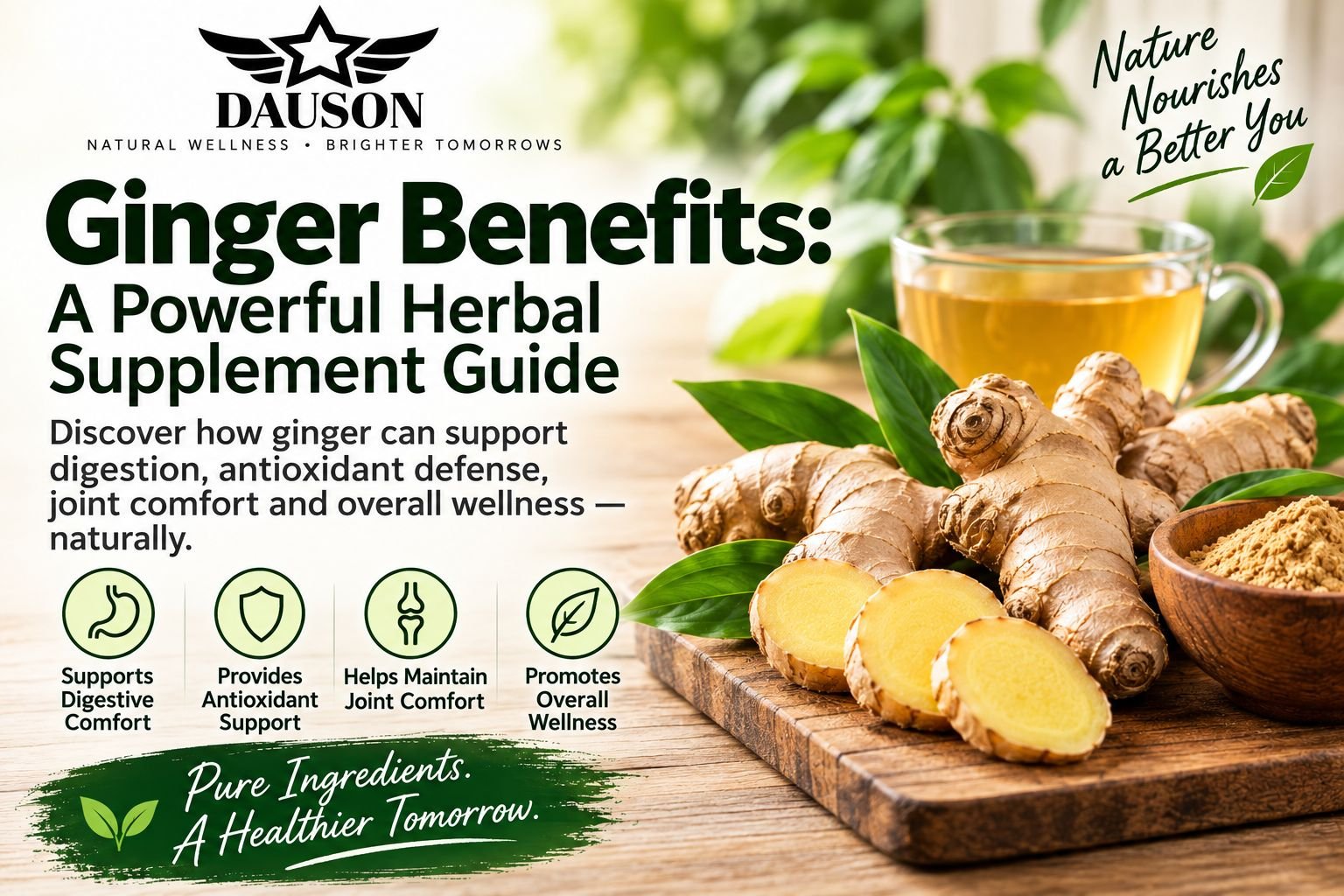

Ginger has been valued for centuries as both a culinary ingredient and a traditional herbal remedy. Recognized by its distinctive aroma, warming flavor, and naturally occurring bioactive compounds, ginger continues to attract attention from people looking for simple ways to complement a balanced, wellness-focused lifestyle.
From digestive comfort to antioxidant activity, the potential ginger benefits extend well beyond its familiar role in the kitchen. Today, ginger is available in many forms, including fresh root, dried powder, tea, extracts, and dietary supplements.
In this guide from DAUSON, we explore what ginger is, its key natural compounds, potential health benefits, common uses, and important considerations when choosing a ginger supplement.
What Is Ginger?
Ginger (Zingiber officinale) is a flowering plant belonging to the Zingiberaceae family, which also includes turmeric and cardamom. The part most commonly used is its underground rhizome, generally referred to as ginger root.
Fresh ginger has a pungent, slightly spicy taste. It can be consumed fresh, dried, powdered, brewed into tea, incorporated into foods, or processed into extracts and supplements.
Ginger has a long history of use in traditional wellness practices. Modern scientific research has also investigated its naturally occurring compounds and their potential effects on areas such as digestion, nausea, inflammation, and oxidative stress.
What Makes Ginger Special?
Many of ginger’s properties are associated with naturally occurring phytochemicals.
Gingerols
Gingerols are among the major bioactive compounds found in fresh ginger. 6-gingerol is particularly well studied and has been investigated for its antioxidant and anti-inflammatory properties.
Shogaols
When ginger is dried or heated, some gingerols can be converted into compounds known as shogaols. These compounds contribute to ginger’s characteristic pungency and are also being studied for their biological activity.
Other Natural Compounds
Ginger contains numerous additional plant compounds and volatile oils. Rather than viewing ginger as a source of one isolated ingredient, it is useful to recognize the complex natural chemistry found within the rhizome.
Potential Ginger Health Benefits
Scientific interest in ginger has grown considerably, although the strength of evidence differs depending on the health outcome, preparation, and dose being studied. A supplement should not be considered a substitute for medical treatment or a varied, nutritious diet.
Here are some of the most researched ginger health benefits.
1. Ginger May Support Digestive Comfort
Digestive support is one of ginger’s best-known traditional uses.
Research suggests that ginger may influence gastrointestinal motility, including the movement of food through the stomach. This may help explain why ginger is commonly associated with digestive comfort.
For people who occasionally experience heaviness or discomfort after eating, ginger can be an appealing addition to a balanced diet and wellness routine.
2. Ginger May Help With Nausea
One of the most extensively researched applications of ginger is its potential role in managing certain types of nausea.
Studies have investigated ginger for nausea associated with situations such as pregnancy and motion-related discomfort, although results and appropriate usage can vary considerably.
Pregnant or breastfeeding individuals should consult a qualified healthcare professional before taking concentrated ginger supplements.
3. Ginger Provides Antioxidant Compounds
Oxidative stress occurs when there is an imbalance between reactive molecules, often called free radicals, and the body’s antioxidant defenses.
Ginger naturally contains compounds with antioxidant activity. These phytochemicals can help protect against oxidative processes at the cellular level.
This is one reason ginger continues to be studied as part of broader research into plant-based nutrition and long-term wellness.
4. Ginger Has Been Studied for Inflammatory Responses
Inflammation is a normal component of the body’s immune response. Persistent inflammation, however, is associated with numerous health concerns.
Compounds such as gingerols and shogaols have been investigated for their effects on pathways involved in inflammatory processes.
While this research is promising, ginger should not be viewed as a treatment for inflammatory diseases. Anyone experiencing persistent pain or inflammation should seek appropriate medical advice.
5. Ginger May Support Joint Comfort
Because of its relationship with inflammatory pathways, researchers have explored ginger’s potential role in supporting joint comfort.
Some clinical research has examined ginger preparations in people experiencing osteoarthritis-related symptoms. Findings suggest potential benefits in certain circumstances, but results vary according to the preparation, dosage, duration, and population studied.
A ginger herbal supplement may therefore be considered as part of a broader wellness routine, rather than as a replacement for recommended medical care.
6. Ginger May Complement Cardiovascular Wellness
Ginger has also attracted research interest in relation to cardiovascular and metabolic health.
Studies have explored possible relationships between ginger supplementation and markers such as blood lipids, blood pressure, and blood glucose. However, these findings should be interpreted cautiously because effects are not uniform across studies.
People taking medicines for blood pressure, diabetes, heart conditions, or blood clotting should discuss ginger supplementation with their healthcare provider.
7. Ginger May Support a Healthy Metabolic Lifestyle
Maintaining metabolic health involves multiple factors, including diet, physical activity, sleep, body composition, genetics, and overall lifestyle.
Some research has investigated whether ginger supplementation can influence metabolic markers. Although these findings have generated interest, ginger is not a shortcut for weight management or metabolic health.
The greatest value comes from viewing herbal ingredients as one component of a comprehensive healthy lifestyle.
Fresh Ginger vs. Ginger Supplements
Both fresh ginger and supplements can have a place in a wellness routine, but they serve different purposes.
Fresh ginger is an excellent culinary ingredient. It can be grated into meals, added to smoothies, infused in hot water, or incorporated into soups and other dishes.
A ginger supplement, on the other hand, offers convenience and a measured amount without requiring daily food preparation.
The composition of supplements can differ significantly depending on whether they contain ginger powder, concentrated extracts, or standardized preparations. Consumers should therefore read product labels carefully rather than assuming all ginger products are equivalent.
How Can You Add Ginger to Your Daily Routine?
There are several simple ways to incorporate ginger into everyday life:
- Add freshly grated ginger to meals, soups, or stir-fries.
- Prepare ginger tea using sliced fresh ginger and hot water.
- Blend a small amount of ginger into smoothies.
- Use dried ginger powder in appropriate recipes.
- Choose a quality ginger supplement when convenience is a priority.
The best option depends on individual preferences, dietary habits, and health considerations.
What Should You Look for in a Ginger Supplement?
The supplement market offers many choices, so product quality deserves careful attention.
Start by checking exactly what form of ginger the product contains and how much is provided per serving. Transparent labeling makes it easier to understand what you are consuming.
It is also worth considering manufacturing quality, ingredient sourcing, unnecessary additives, recommended serving instructions, and any applicable quality-testing information.
A reputable herbal supplement should make its ingredients and directions clear rather than relying on exaggerated health promises.
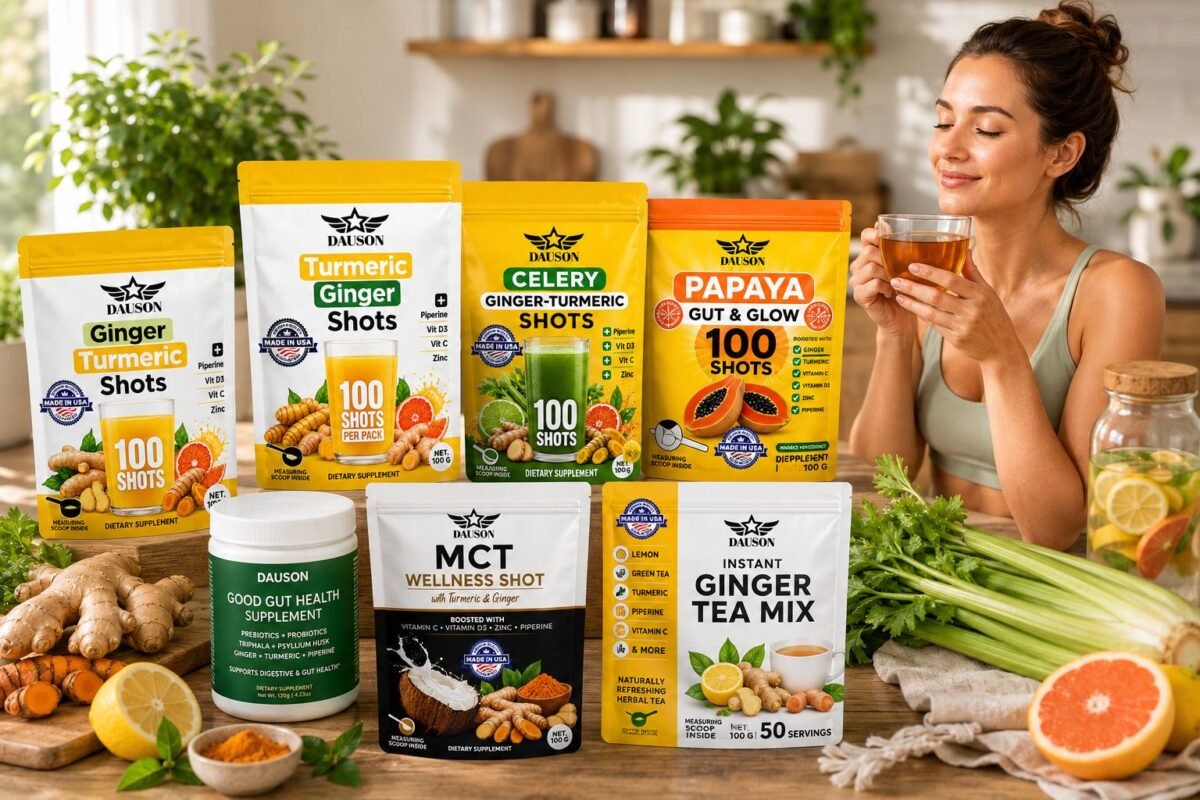
Consumers interested in exploring herbal supplements and learning more about the DAUSON range can visit the official DAUSON website or browse the DAUSON Amazon Store for available products.
Can You Take Ginger Every Day?
Ginger is widely consumed as a food, and many people also use ginger-containing supplements regularly. However, the appropriate amount depends on the form of ginger, its concentration, individual health circumstances, and other medications or supplements being used.
More is not necessarily better.
Concentrated herbal supplements can provide substantially different amounts of active plant constituents than normal culinary use. Always follow the directions provided with a supplement and seek professional advice when necessary.
Ginger Supplement Safety and Precautions
Although ginger is commonly consumed, supplements may not be appropriate for everyone.
Some people may experience digestive effects such as heartburn, abdominal discomfort, or diarrhea, particularly at higher intakes.
Extra caution may be appropriate for people who:
- Are pregnant or breastfeeding
- Take anticoagulant or antiplatelet medicines
- Use medicines that affect blood glucose or blood pressure
- Have a bleeding disorder
- Have an upcoming surgical procedure
- Have an existing medical condition
- Regularly take prescription medicines or multiple supplements
A doctor, pharmacist, dietitian, or other qualified healthcare professional can provide individualized guidance.
Why Ginger Remains an Important Herbal Ingredient
Ginger represents an interesting meeting point between traditional use and modern scientific investigation.
Its long history does not automatically prove every health claim associated with it, just as emerging research does not mean ginger should be treated like a pharmaceutical medicine. What makes ginger particularly noteworthy is the combination of traditional dietary use, distinctive phytochemistry, and an expanding body of scientific research.
For consumers interested in plant-based wellness, ginger can be a practical ingredient to explore as part of a balanced lifestyle.
Frequently Asked Questions About Ginger
What are the main benefits of ginger?
Ginger is best known for its traditional use in digestive wellness. Scientific research has also explored its potential role in nausea, antioxidant activity, inflammatory responses, joint comfort, and aspects of metabolic health. The strength of evidence varies depending on the specific benefit and type of ginger preparation.
What is a ginger supplement used for?
People commonly choose ginger supplements for convenient access to ginger as part of their digestive, nutritional, or general wellness routines. Intended uses vary by product, so consumers should follow the individual product label.
Is ginger good for digestion?
Ginger has traditionally been used for digestive comfort, and scientific studies have investigated its effects on gastrointestinal function and gastric motility. Individual responses can vary.
Is ginger an antioxidant?
Ginger contains naturally occurring phytochemicals, including gingerols and shogaols, that demonstrate antioxidant activity. Antioxidants help counter oxidative processes, although this does not mean a ginger supplement can prevent or treat disease.
Is it safe to take a ginger supplement every day?
Daily suitability depends on the product, amount, individual health status, and medicines being taken. Follow the product directions and consult a healthcare professional if you have a medical condition, are pregnant or breastfeeding, or take medication.
Is fresh ginger better than a ginger supplement?
Neither is automatically better. Fresh ginger is a versatile whole-food ingredient, while supplements provide convenience and more controlled serving amounts. The right choice depends on your goals and how you prefer to incorporate ginger into your routine.
Who should be careful when taking ginger supplements?
People using certain medications—particularly medicines affecting blood clotting, blood glucose, or blood pressure—should seek professional advice before taking concentrated ginger products. Individuals preparing for surgery, pregnant or breastfeeding people, and those with existing health conditions should also check with a qualified healthcare professional.
Make Ginger Part of Your Everyday Wellness Routine
Ginger has earned its place among the world’s most recognized herbal ingredients. From its traditional role in digestive wellness to modern research into gingerols, shogaols, antioxidant activity, and inflammatory pathways, this distinctive rhizome continues to generate considerable scientific interest.
For people interested in incorporating herbal supplements into their wellness routine, DAUSON offers a convenient way to explore plant-based supplementation.
Explore DAUSON herbal supplements:
Visit the official DAUSON website
You can also shop through the brand’s Amazon storefront:
Explore the DAUSON Amazon Store
Make informed choices, follow product directions, and consider herbal supplementation as one part of a balanced approach to everyday wellness.
Disclaimer: This content is provided for general educational and informational purposes only and is not intended to diagnose, treat, cure, or prevent any disease. Dietary supplements should not replace a balanced diet or professional medical care. Consult a qualified healthcare professional before using supplements if you have a medical condition, take medication, are pregnant or breastfeeding, or have specific health concerns.